

Panels sized to temperature
Thickness has to match the temperature delta around the room. We use 42 kg/m³ PIR/PU foam, B-grade fire rating, FM-approved. Go too thin and the compressor pays for it every single day.
Plenty of walk-ins hold temperature empty at 6am and drift warm by lunch. Nobody counted the door traffic, the incoming product, the people, the lights, and August all at once.
We do. We calculate the real load, fit the room to how you actually work, install the whole system, and come back to service it. We ran a food plant for 25+ years. We know what a warm room costs.
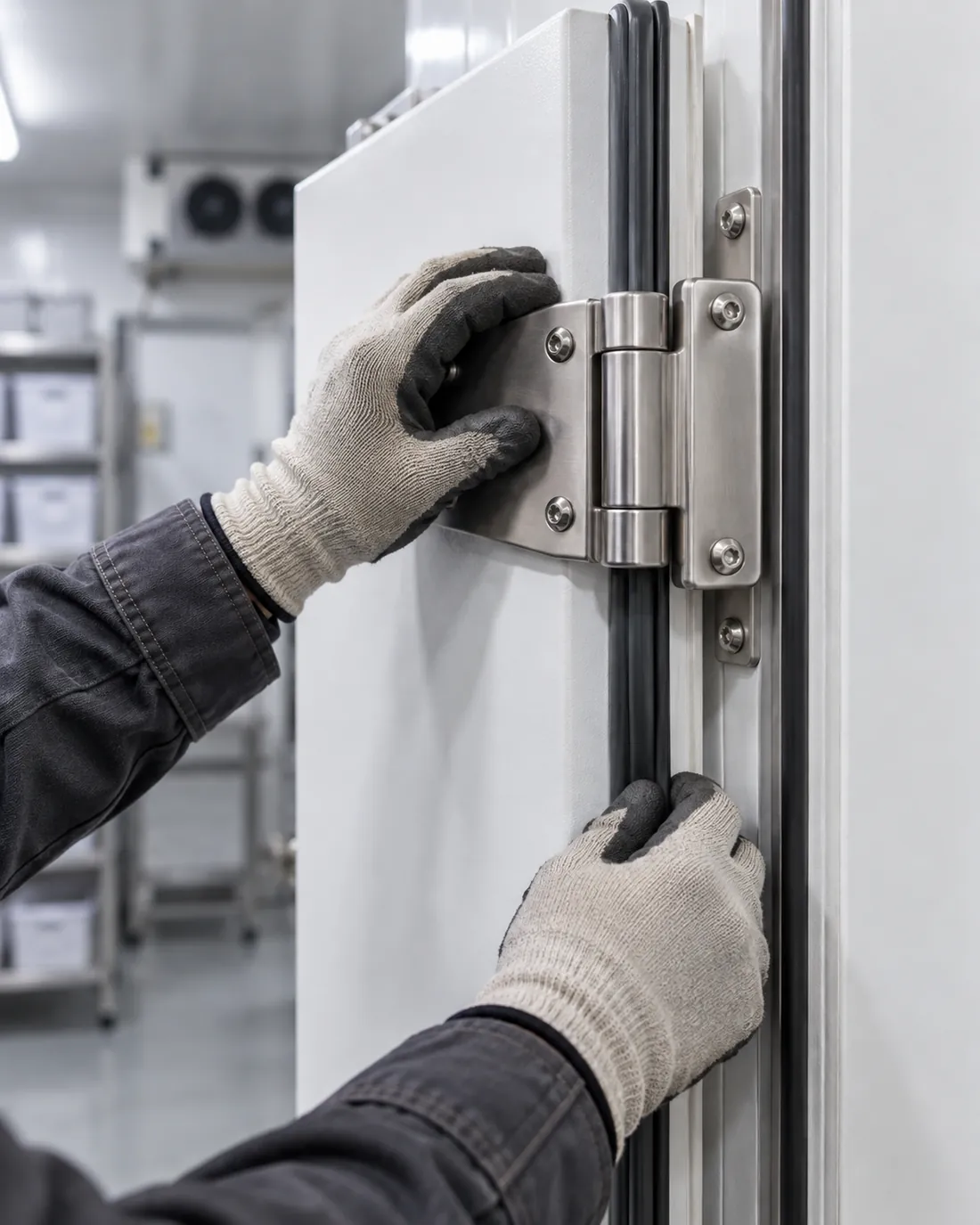
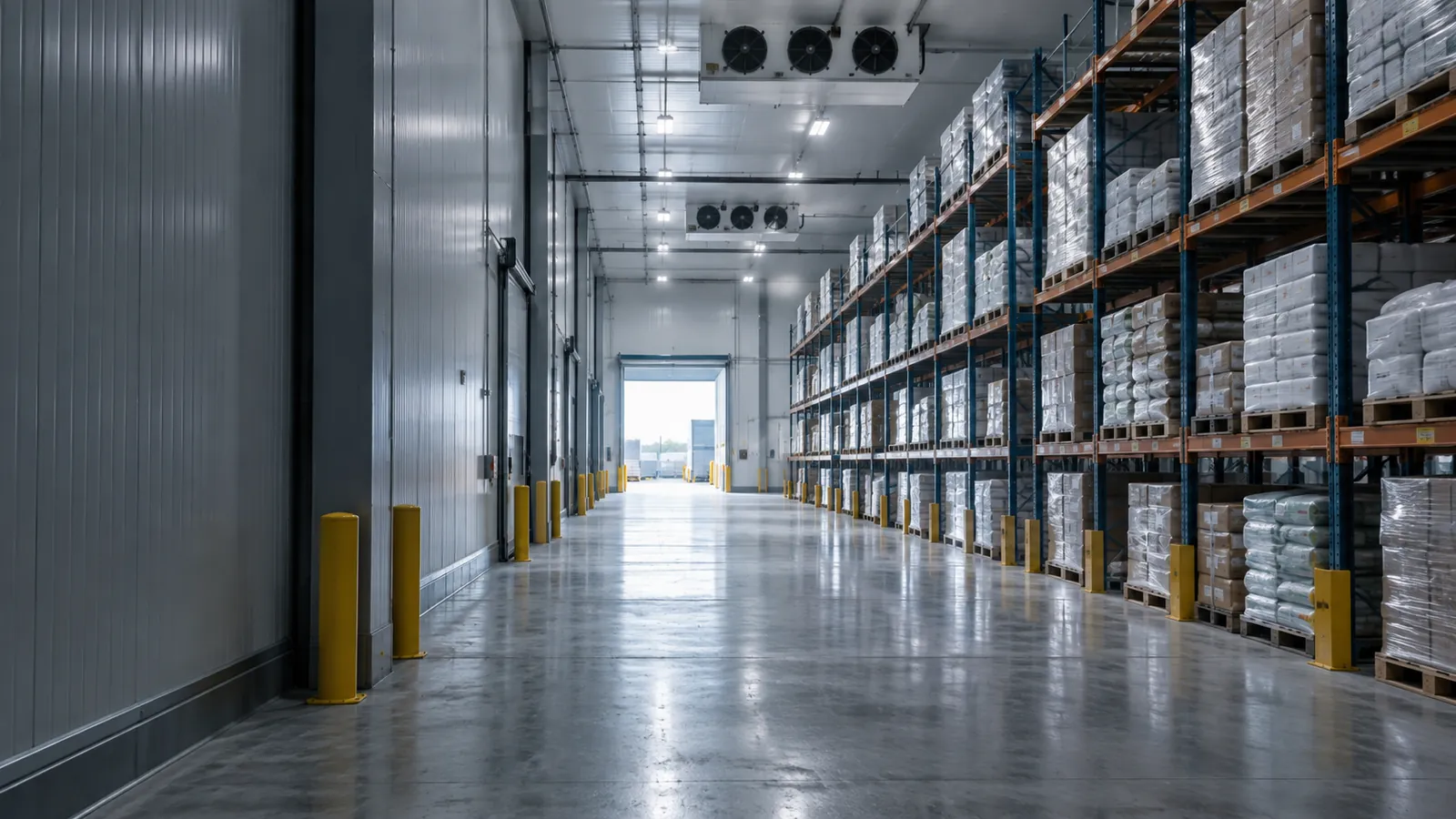
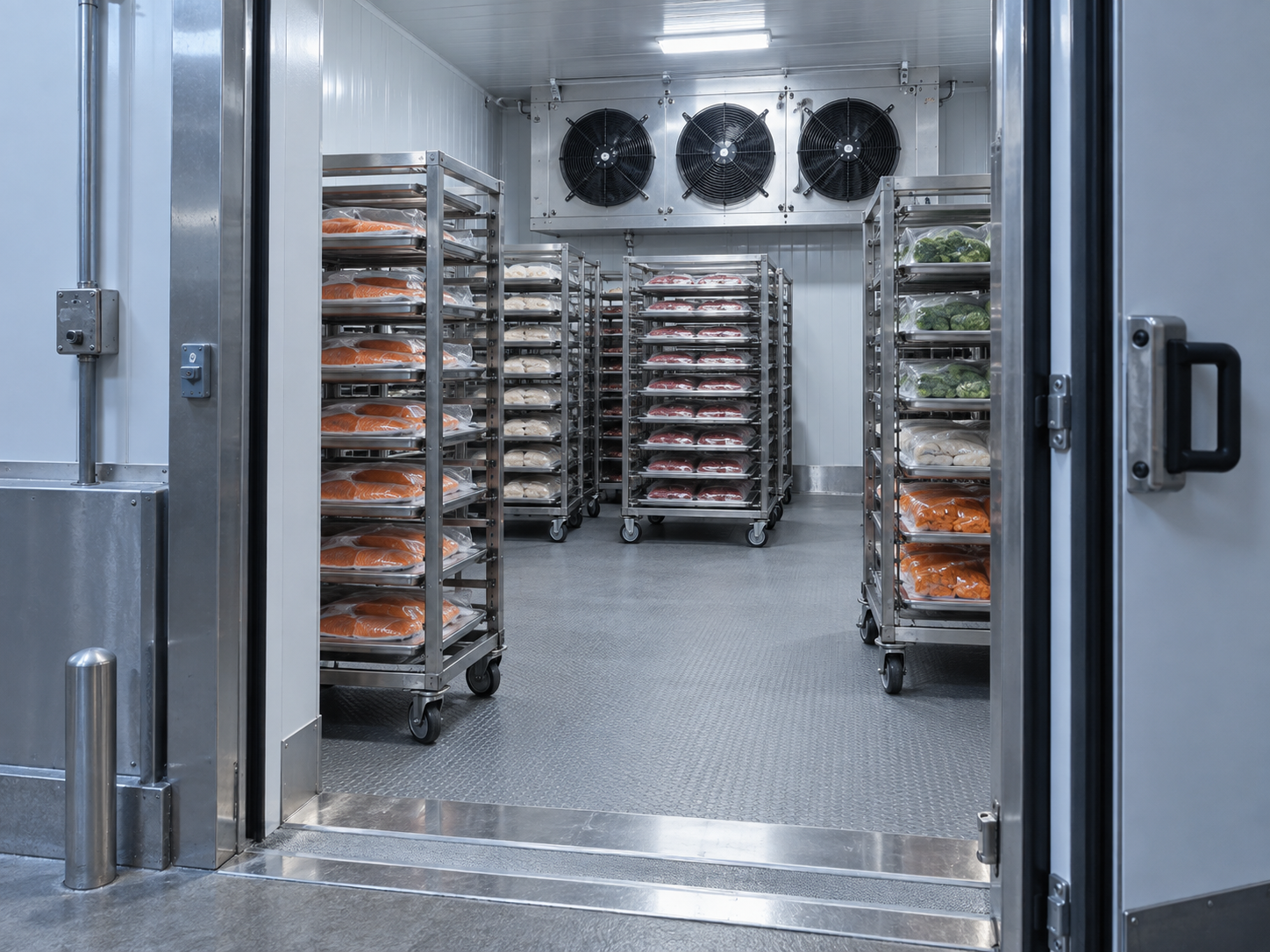
Thickness has to match the temperature delta around the room. We use 42 kg/m³ PIR/PU foam, B-grade fire rating, FM-approved. Go too thin and the compressor pays for it every single day.

We count heat through the envelope, door infiltration, incoming product, lights, people, and motors, then match Bitzer or Copeland condensing units to that number. Oversized short-cycles. Undersized runs all day and still loses ground.
Bitzer and Emerson Copeland compressors, Danfoss valves and controls, Schneider electrical protection. Double-sided blowing air coolers spread air across the room.

A forklift lane needs a sliding door. Foot traffic usually wants a hinged one. Freezer openings get heater wire so frost doesn't build at the frame. We size it to the traffic, then hang it 100% sealed.
Aluminum-frame doors with a PU foam core, built to the opening. Standard size is 2.0 × 2.4 m.

A freezer floor carries racks, pallet jacks, and forklifts without opening a path for water or frost. XPS insulation at 250 kPa, SBS waterproofing, and a two-layer vapor barrier, done right the first time.
The materials change with the room: stainless 304 where you wash down, galvanized or color-plate steel where you don't. Panels and components are engineered for a 20-year service life and backed by a maintenance plan.
| Walk-in cooler | Walk-in freezer | |
|---|---|---|
| Operating temp | 35–40°F (+2 to +4°C) | 0°F (-18°C), to -25°C hard-frozen |
| Typical product | Produce, dairy, fresh, chocolate, butter | Frozen meat, seafood, prepared foods, ice cream |
| Panel | 100mm high-density PIR | 150mm high-density PIR |
| Start with a cooler → | Start with a freezer → |
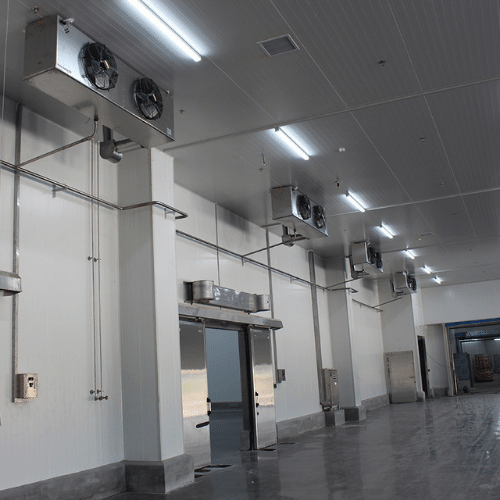 Cryo SystemsWalk In CoolerThe Walk In Cooler from Cryo Systems is a walk-in cooler built with high density PIR/PU foam panels and high efficiency condensing units, in standard or custom builds.
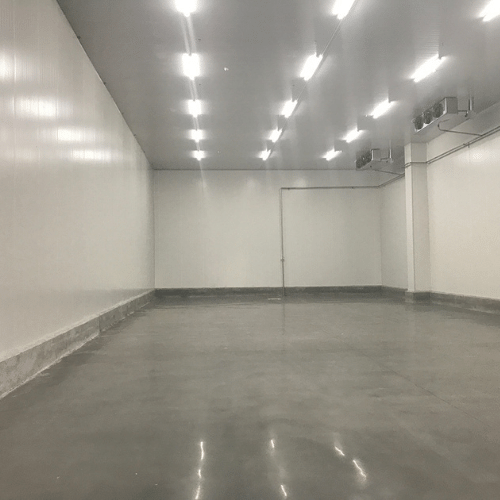 Cryo SystemsWalk In FreezerThe Walk In Freezer from Cryo Systems is a walk-in freezer built with high density PIR/PU foam panels and high efficiency condensing units, in standard or custom builds.
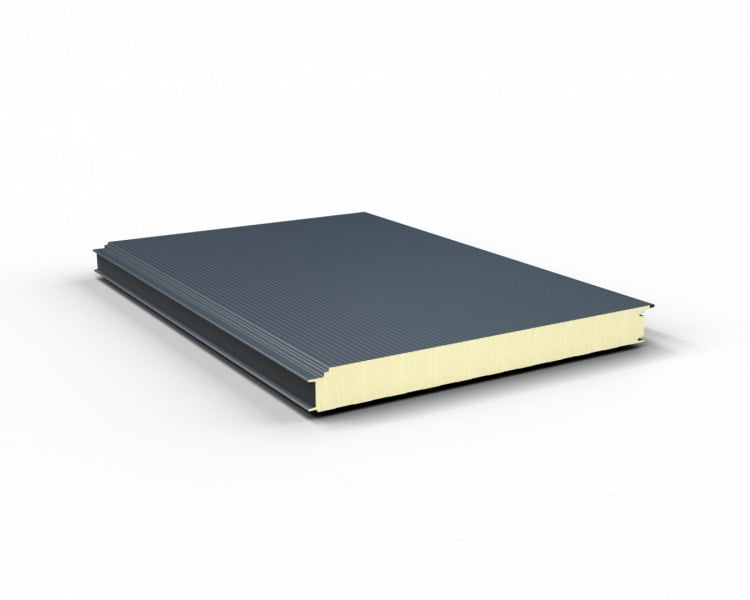 Gór-StalGS insPIRe U Cooler PanelsGS insPIRe U cooler panels from Gór-Stal are PIR-core insulated panels for exterior curtain walls and interior partition walls, installed vertically or horizontally with hidden fasteners.
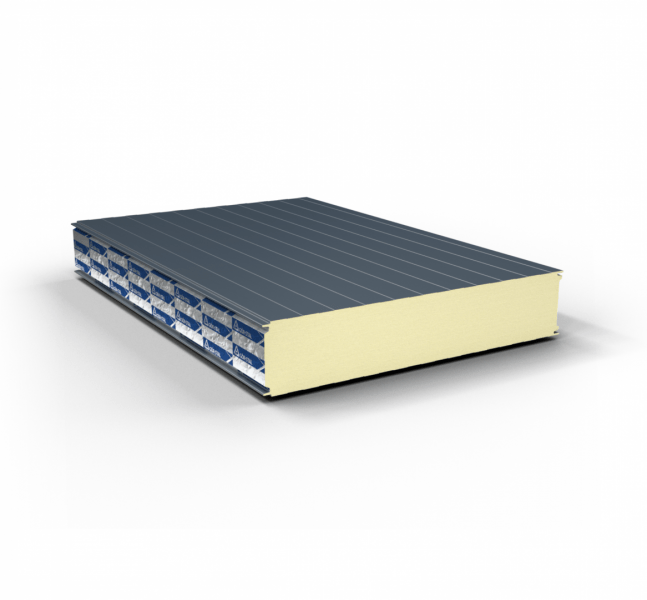 Gór-StalGS insPIRe CH Freezer PanelsGS insPIRe CH freezer panels from Gór-Stal are PIR-core panels for walls and ceilings in cold rooms and freezers, mounted vertically or horizontally.
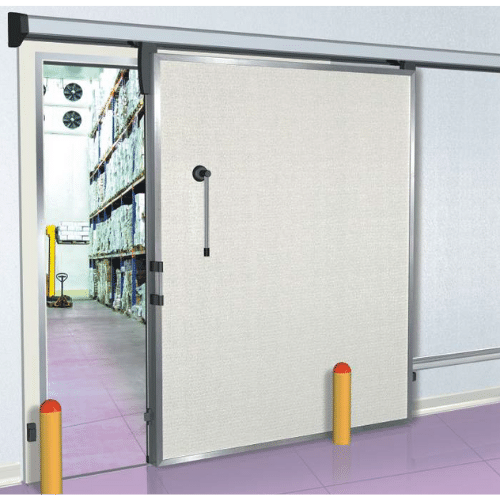 ARM Doors480 LWT Sliding DoorThe 480 LWT is a lightweight insulated sliding door from ARM Doors for cold storage rooms.
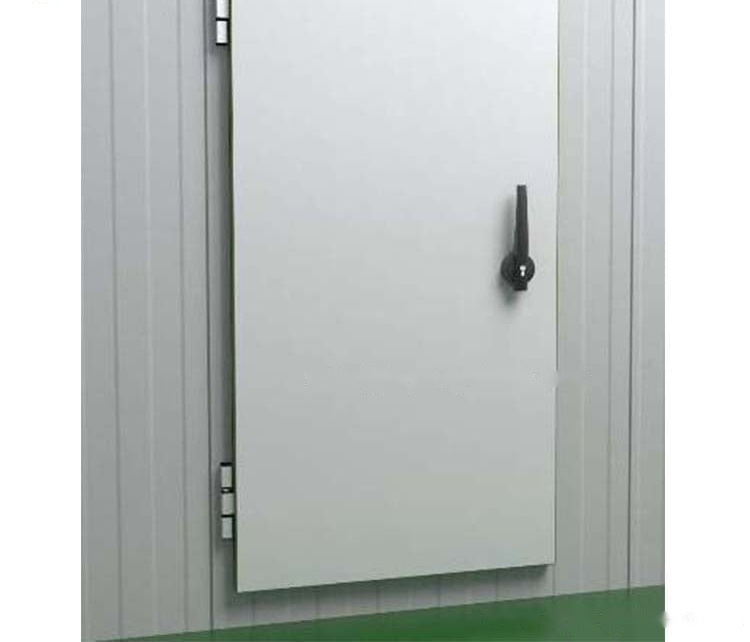 Cryo SystemsCold Room Hinged doorThe Cold Room Hinged Door from Cryo Systems is a hinged cold-room door for food, industrial, supermarket, storage, medicine and retail rooms.
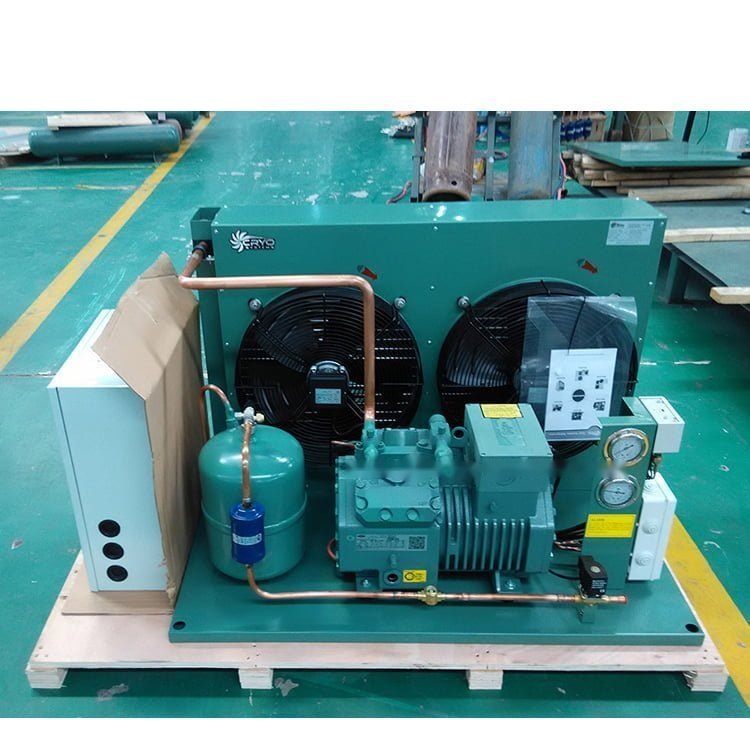 Cryo SystemsBitzer Condensing UnitThe Bitzer Condensing Unit from Cryo Systems pairs a Bitzer ECOLINE semi-hermetic piston compressor with an air-cooled copper-tube, aluminum-fin condenser.
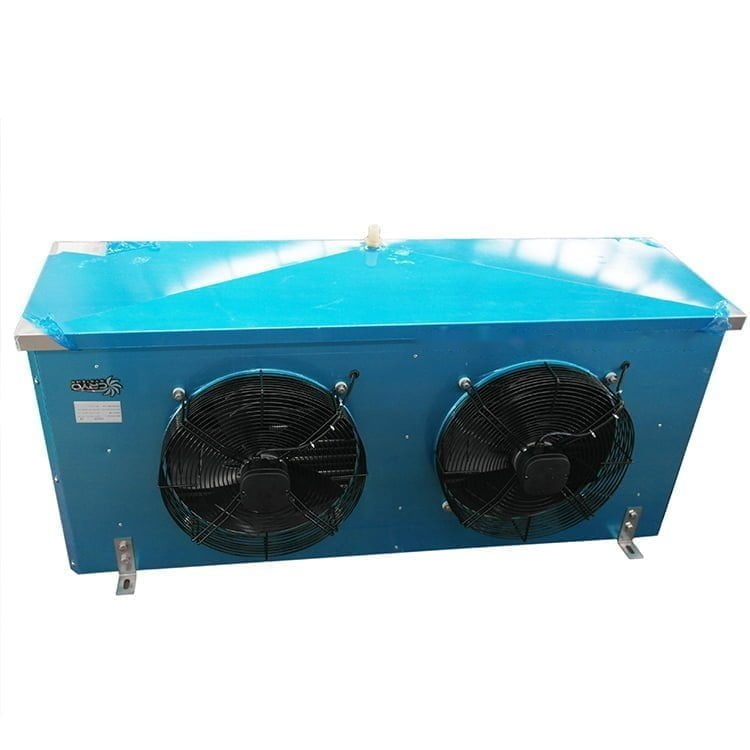 Cryo SystemsMedium-Temperature EvaporatorThe Medium-Temperature Evaporator from Cryo Systems is a DL series unit cooler for cooler and chill rooms at 23 to 41°F (−5 to 5°C).
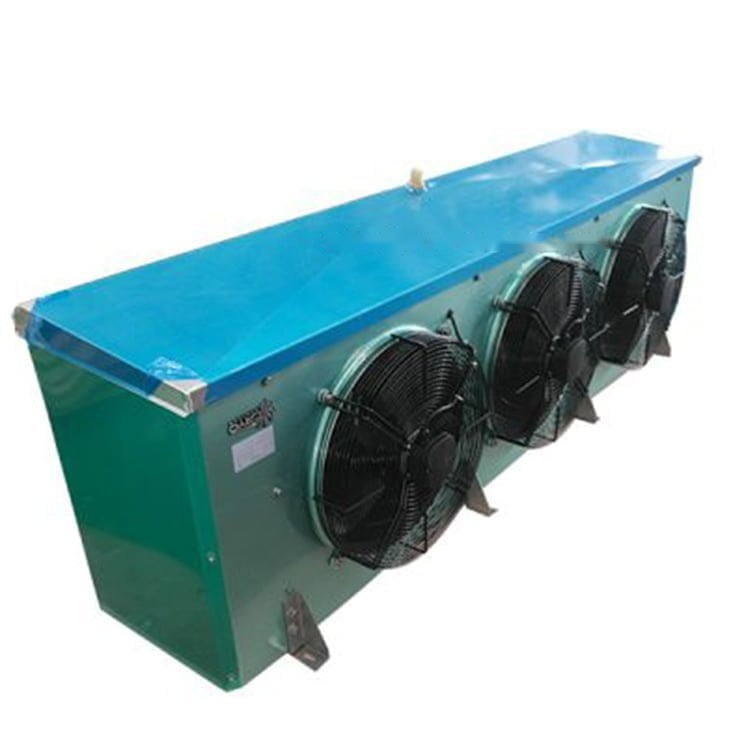 Cryo SystemsLow-Temperature EvaporatorThe Low-Temperature Evaporator from Cryo Systems is a DD series unit cooler for freezer rooms at −13 to 5°F (−25 to −15°C).
Temperature changes the whole build. A cooler holds 35–40°F on 100mm PIR panels and can usually sit on the existing slab. A freezer holds 0°F, or down to -25°C for hard-frozen product, on 150mm panels. It also needs an insulated floor to protect the slab, heater wire at the door, and evaporator defrost. Colder means a bigger condensing unit and more power. And the existing slab still gets checked before we say it can stay.
Yes. That's a box-in-a-box conversion. Insulated panels go up inside the existing walls, with an insulated floor build if it's a freezer. Before we price it we check ceiling clearance for the panels and evaporator, slab condition, drainage, forklift access, and where the condenser's going to reject heat. The existing shell saves time and construction, but only if those conditions work.
Four loads, added up: heat through the panel envelope, warm air coming in through the doors, incoming product that has to pull down, and heat from lights, fans, equipment, and people. Then a run-time factor, and we match the condensing unit and evaporator to it. Oversizing doesn't make the room safer; it short-cycles the compressor and wears it out. Undersizing means the room loses temperature on the day you need it most.
Based in Roselle, NJ · maintenance plans across our NJ tri-state service area
We install across NJ, NY, PA, New England, and the Mid-Atlantic with our own crews. Equipment supply is available beyond that footprint.
Run the estimator for a planning estimate, no email required. If the project's ready to talk about, send the square footage, target temperature, product load, and door traffic, and we'll tell you what's realistic.
See your room's size, layout and planning number in a few minutes.